In early November 2026, Bitcoin stabilized around $78,200 after tumbling to a six-week low of $75,700 on the night US election results were tallied. The market is attempting to find
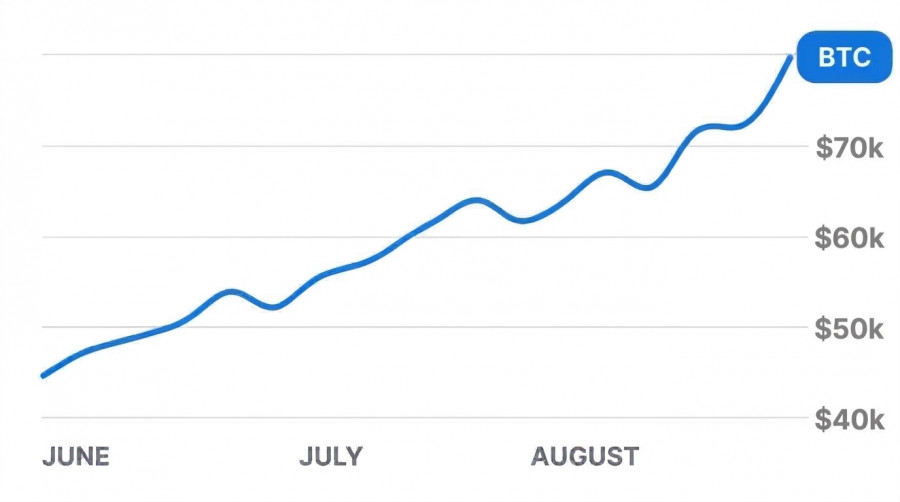
In early November 2026, Bitcoin stabilized around $78,200 after tumbling to a six-week low of $75,700 on the night US election results were tallied. The market is attempting to find its footing after severe shocks erased $300 billion from the cryptocurrency sector's total capitalization in a single month. The flagship cryptocurrency is trading 41% below its all-time high of $122,000, reached in October 2025. The aggregate value of all digital assets has dropped to $2.61 trillion.
The heaviest blow to the market came from the largest heist in the industry's history. In late October, hackers breached the systems of the Binance exchange and siphoned off $6.3 billion in assets—four times the previous record set by the Bybit breach, which saw losses of $1.5 billion. An FBI investigation linked the attack to the North Korean syndicate TraderTraitor, also known as Lazarus. The perpetrators bypassed security measures via a company systems engineer's work laptop. The transfer of a portion of the stolen funds was successfully intercepted: stablecoin issuers Tether and Circle acted swiftly to freeze $2.5 billion in digital dollars across the attackers' accounts.
Binance leadership pledged to cover customer losses using corporate reserves and the SAFU (Secure Asset Fund for Users), restoring 95% of account balances by early November. Nevertheless, once withdrawals reopened, users pulled more than $4.7 billion off the platform. The panic triggered $1.49 billion in forced liquidations of leveraged exchange positions. Trading platforms automatically sold off traders' collateral at market prices, dragging Bitcoin down below $76,300. The incident turned October 2026 into the worst-performing month for the asset in twelve years.
Institutional investors responded with substantial withdrawals from exchange-traded funds. Spot ETFs recorded $643 million in net outflows on the first trading session following the incident and shed another $400 million during the next. Cumulative redemptions surpassed $1 billion, snapping previous inflow trends. Concurrently, the Democratic Party's victory in the US midterm elections stalled the CLARITY Act, a legislative initiative intended to streamline compliance for crypto firms and rein in regulatory scrutiny.
The US Federal Reserve compounded market pressure by holding interest rates in the 3.75%–4.00% range, with two governors signaling their readiness to vote for a rate hike. The probability of policy tightening in December climbed to 80%. Government bond yields hovered near multi-year highs, prompting conservative funds to reallocate capital away from crypto assets and into guaranteed sovereign debt.
Key Downside Catalysts
Outlook
Our projection for Bitcoin remains considerably more conservative than the consensus among market analysts, who anticipate a rapid reclaim of $80,000 followed by an assault on the psychological $100,000 barrier.
Throughout November 2026, the cryptocurrency is expected to remain range-bound between $75,000 and $80,000. The $76,000 level will serve as a defensive buffer, aligning with the asset's 200-day moving average. Local support will be reinforced by the conclusion of Binance's customer restitution process and fresh accumulation by Strategy, which recently acquired an additional 811 coins. However, clearing the cluster of sell orders between $79,500 and $80,500 will prove unattainable without a renewed influx of institutional capital.
A political lull in Washington will act as an additional headwind. The incoming Congress will not convene until next year, keeping the CLARITY Act dormant through the end of winter. Selling pressure is poised to intensify ahead of the December FOMC meeting. Should the central bank raise the policy rate by 25 basis points, Bitcoin will likely slide to test support between $74,000 and $75,500.
An advance into the $82,000–$87,000 range is unlikely before the first quarter of 2027, contingent upon an end to ETF outflows and sustained operational stability at Binance. A return to the all-time high of $122,000 is off the table over the next two quarters. Market participants should avoid chasing relief bounces and instead look to accumulate on pullbacks toward the primary support zone near $76,000.

QUICK LINKS
ForexMart is authorized and regulated in various jurisdictions.
(Reg No.23071, IBC 2015) with a registered office at First Floor, SVG Teachers Co-operative Credit Union Limited Uptown Building, Corner of James and Middle Street, Kingstown, Saint Vincent and the Grenadines
Restricted Regions: the United States of America, North Korea, Sudan, Syria and some other regions.


 Contact Us